

[Please note, this post, like every post at The Self-Publishing Coach, was written by a human – me! – Alexandra Amor.]
One of the most frequent questions I get asked is, “How can I sell more books?” It’s not an unreasonable question. As I’ve mentioned in previous articles, book marketing is like an octopus. It is a many-limbed animal and each limb is important.
So let’s talk about the limb called reader magnets and their role in helping authors market their books.

What is a ‘Reader Magnet’?
A reader magnet is a means to bring a reader onto an author’s email list. It is something offered for free in exchange for the reader’s email address. For example a short story, a character study, or a novella.
It’s called a ‘magnet’ because it connects authors to readers.
You’ve likely signed up for some sort of magnet or ‘freebie’ in exchange for your email address. For example, companies that sell products from their websites often offer savings on your first purchase in exchange for an email address.
Why is collecting email addresses important?
Why is this happening? Why do authors and companies want customer email addresses?
It’s possible to reach customers in other ways, of course. Social media is a popular tool for this. However, the big reason authors and business owners collect email addresses is sovereignty over their book marketing.

Here’s an example of why this sovereignty is important. In the early 2010s many very successful authors had methodically and strategically built large groups of followers (sometimes many thousands) in Facebook groups. The groups were active and the reader members of those groups waited with anticipation for the author’s next release. When a new book was released the group members snapped it up, assisting the author to rise in the rankings at the online retailers and increasing their exposure to new readers, not to mention their income.
Overnight, all that changed.
One day, Facebook made changes to their algorithms. Suddenly, when authors with reader groups posted to those groups only a small percentage of the group would see the post. Engagement dropped and sales followed. Authors were enraged. After all, they reasoned, their hard work had built their following.
None of that reasoning mattered to Facebook. And how much control did authors have over this change?
Zero.
You don’t control the algorithms
This is the main lesson of the reader magnet subject. You don’t control Facebook or TikTok or Youtube or Instagram or Substack. These platforms can – and often do – change the way they do business overnight and completely change the access their customers have to the followers they’ve attracted.
An email newsletter does not come with this kind of built-in lack of control.
When you subscribe to an email newsletter you have full control of the names on your newsletter lists. The newsletter provider (MailerLite, Kit, MailChimp etc.) cannot take those email addresses away from you. You pay for this right with a monthly or yearly subscription. You can export the names and addresses on the list at any time and keep that export as a back-up.
Social media has stopped being social
We’ve all noticed over the last few years that social media has stopped being social and has become a place overrun with advertisements and promotions. I just did a quick check on my Instagram account, and for every post I see from someone I’m following I see 3 or 4 ads or promotions.
So, yes, you could build a following of 100,000 people on any of these social media platforms, but how many of those followers are going to actually see your posts when you have a new book out? And what happens when that platform suddenly changes the way the algorithm works?
This is why we’re discussing reader magnets
When you have people on a newsletter list, you have much more direct access to those people than you would if they were your social media followers.
Your newsletter with news about your new book is far more likely to reach a reader’s eyeballs than a social media post is.
I’m not saying social media is useless. It has its place as one tool in an author’s toolbox. I just caution against using it as your only book marketing tool.
In my opinion, building up a list of newsletter subscribers is one of the most important things an author can do when it comes to book marketing.

How do you do that?
With a reader magnet.
You need something to give away to the reader, for free, that will entice them to hand over their email address, which is a precious commodity. In exchange for having access to your reader’s inbox you are offering them something of value; a piece of your creative work.
Your reader magnet must be something that your ideal reader will perceive as being valuable. It could be a short story, a character background sketch, deleted scenes from a book, or any other creative offering that tickles your fancy… and your readers’.
To deliver this reader magnet to your readers you will need to:
- Sign up for a newsletter service (like MailChimp or MailerLite or Kit)
- Put a mention of the reader magnet on your website with a sign-up form
- Set up your newsletter so that the reader automatically receives the reader magnet when they enter their email address in the form. (I use BookFunnel as part of this process. BookFunnel delivers the file (ebook or PDF) to the reader and walks them through how to get the file onto their eReader or tablet.)
One way to drive traffic to your reader magnet is to put a mention of it in a book you have for sale at an online retailer. In the ebook, you can include a live link to a specific page on your website where your readers can sign up for the reader magnet. They can click from the link directly to your website. You can also mention the page in a paperback book, it will just be slightly more laborious for the reader to go to a browser and type in the address.
Once you’ve taken these steps, you’ll start to build a list of subscriber ‘fans’ who are specifically interested in your work.
Keep in touch with your readers
When you’ve got the newsletter list set-up and running, make sure to keep in touch with your readers. One thing that authors often struggle with once they have a newsletter list is what to say in the newsletters they send out and how often they should say it. I recommend setting a reasonable schedule for yourself.
For example, if you’re not a rapid release author, let your readers know in the automatic message they receive when they sign-up for your reader magnet that you send newsletters out quarterly. Or even just when you have news.
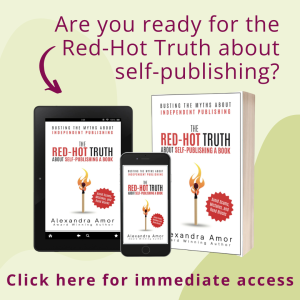
I’ve been in a dormant phase in my fiction writing life for the past few years, so I don’t have a reader magnet at my author website at the moment. That’s something I plan to change in the future as I’m getting back into writing fiction. (Yippee!) But you’ll notice the image below, and in the sidebar at right, which serves as my reader magnet to add interested authors to my newsletter list here at The Self-Publishing Coach.
Do you have a reader magnet in place at your website? If not, what do you think you could use to entice interested readers onto a newsletter list?
This post, like every post at The Self-Publishing Coach, was written by a human – me! – Alexandra Amor.
Octopus illustration by Tetiana Gutnyk on iStock Photo
Group image by Brooke Cagle on Unsplash
Magnets image by Maria Cappelli on Unsplash

Leave a Comment