
[Please note, this post, like every post at The Self-Publishing Coach, was written by a human – me! – Alexandra Amor.]
When it comes to publishing a book, there are a number of options available to authors these days. We are fortunate to be living in a time when we can make publishing choices that work for us as artists.
(For the purposes of this post, we’re going to be discussing publishing books, not having a story published in a magazine or newspaper etc.)
Deciding how to publish your book is a complex process, so to simplify that I’d like to offer a series of questions to ask yourself that will help you navigate the decision about what kind of publishing might work best for you.
However, before we do that, first we need to bust the two most common myths about publishing.
Myth #1: Traditional publishing offers marketing support
Many authors believe that a large benefit that comes along with a traditional publishing contract is marketing support from the publisher. 30 years ago that was absolutely the case. Currently, however, unless your name is Stephen King or Diana Gabaldon most authors are left to do 99% of their book marketing themselves.
There are a few reasons for this. Among the highest on the list is that publishers are not as financially flush as they used to be. They’re feeling the pinch just like the rest of us.

Hence, they don’t have huge budgets to spend on new, unproven authors. What they tend to do is put any marketing effort they have behind proven winners. This has the effect of leaving new authors to do most book marketing themselves, even though they’re receiving a fraction of the royalties for their book (compared to self-publishing).
Also, traditional publishers are busy. They’ve got dozens of books coming down their production pipeline. A new author’s book is but one cog in that large wheel. I’ve heard traditionally published authors say that they received, at best, a week or two of marketing focus from their publisher before the publisher had to move on to the next book in the schedule.
I also learned recently from one traditionally published author that the only thing the marketing department at her publishing house did for her was to ask the author for a list of their marketing ideas and contacts, essentially putting the task of marketing squarely in the author’s lap. Ultimately, this author ended up organizing a tour to bookstores and libraries in her area, with zero help from the publisher.
Myth #2: Traditionally published authors make more money
The truth is, no one can predict how much money a book will make, no matter how it’s published. But let’s break down what the financials generally look like for a traditionally published book vs. an independently published book.
Traditionally published book:
- No upfront cost. You never have to pay a trad publishing house to publish your book. (If you’ve found a publisher who wants to charge you money, that’s not traditional publishing.)
- Royalties: generally speaking, a traditionally published author will be paid approximately 10% royalties by the publisher. If the author received an advance from the publisher, then any royalties are not paid out until they exceed what has already been paid to the author with the advance.
Independently published book (also known as self-published):
- There is an upfront cost: In most cases, an author who publishes independently pays for editing (sometimes more than one editorial pass), book cover design, and formatting.
- The total cost for these things ranges widely, of course, but an author is likely looking at an investment in their book of approximately $1000 to $2000.
- There are ways to minimize this cost but if an author wants to produce a book that is indistinguishable from a traditionally published book then they are necessary.
- Neglecting to pay for quality, professional editing and book cover design usually ends up working against the author because the response from readers for the book will be muted or, in the worst cases, negative.
- Royalties: A self-published author receives 70% royalties from every book sold. The online retailer keeps the rest. It should also be noted that in most cases there is no cost to upload a book to the online retailers.
Okay, now that we’ve shone a light on those two powerful myths, let’s talk in more detail about:
How to make the decision to self-publish.
One of the most effective ways to do this is to ask yourself the following series of questions.
- What are your goals for your book and your author career?
- If you think you might only ever publish one book and have no desire to have an author career or business then traditional publishing might be the way to go.
- How much creative control do you want over your book?
- As an independent author you have total creative control over your book; its cover, its formatting, its layout and look. Traditionally published authors are not given this type of control.
- Are you planning or wanting an author career?
- If you plan to publish multiple books over the long term you’ll want to factor this into your decision. An example that illustrates this point: you might receive a traditional contract for 2 books but want to publish more than that in a series. In that case, after book 2 you’d have to negotiate a new contract with your publisher or find a new publisher to pick up the series.
- How much responsibility do you want for your book and your author career?
- If the answer is ‘very little’ then traditional publishing may be the way to go. Independent authors, by necessity, are involved in not only the writing and publishing of a book, but also its marketing. They are also responsible for things like an author website, promotional events, and more.
- Do you love to learn new skills?
- This ties into the point above. There are endless things to learn as an independent author, everything from how advertising platforms work to how newsletter services work to what cover design styles are trending. If this doesn’t appeal to you, self-publishing may not be the right choice.
- Are you looking for external validation for your book?
- Has it long been a dream to see your book in a bookstore or airport? Do you fantasize about being interviewed about your book on a breakfast television show? If so, traditional publishing may be the better choice. Occasionally, an independent author will break through into mainstream awareness (e.g., E.L. James or Rachel Reid) but generally for indie authors satisfaction comes from areas other than external validation.
- Are you in a hurry to publish your book?
- Traditional publishing houses have a pipeline of books they’re working with. If you happen to make it into their schedule, you’re likely looking at at least a year, or possibly as much as two, before your book comes to the top of their production list. And this is likely after you’ve spent a generous amount of time sending the book to agents and/or publishers. If you want to see your book in print sooner rather than later, self-publishing might be the way to go.
I personally love that there are choices available to authors these days about how to get their books and books in front of readers.
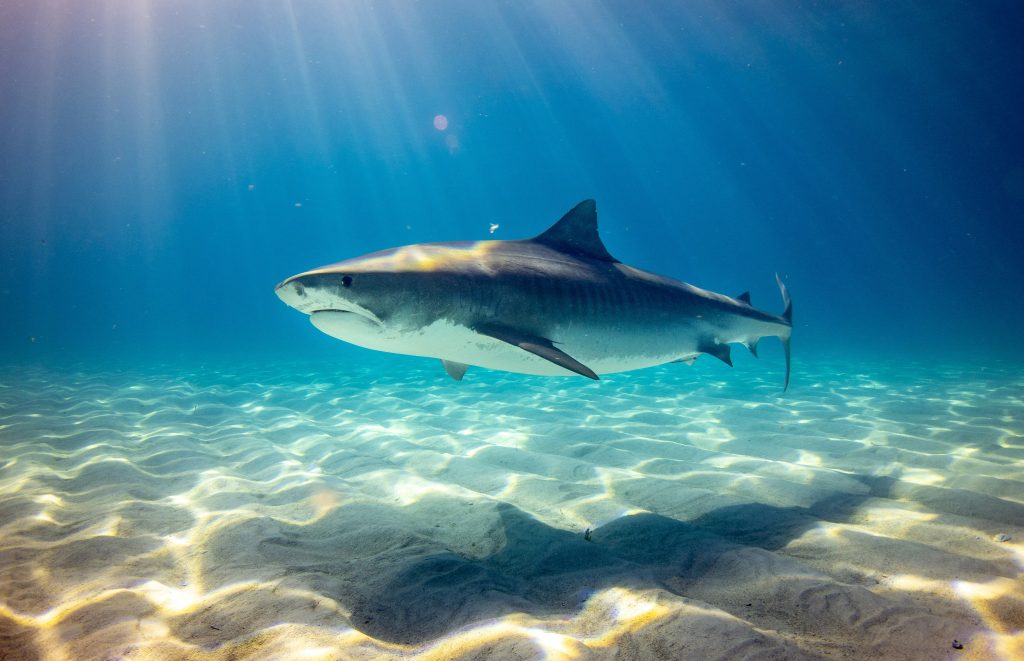
It is important to educate ourselves about these choices, first to determine the right path for yourself, and also to avoid the sharks that circle in the waters. (With the rise in self-publishing has come opportunists trying to fleece those authors who are unaware of their options.)
Which path is right for you and your book?
Only you can say. But, if you’re interested in publishing, I hope the information provided here offers you some clarity about how to begin to explore the best path for you.
This post, like every post at The Self-Publishing Coach, was written by a human – me! – Alexandra Amor.
Scottish castle photo courtesy Connor Mollison on Unsplash
Shark photo courtesy Gerald Schömbs on Unsplash

Leave a Comment